
What Is an AI Detector
An AI detector is a tool that analyzes written text to determine the likelihood it was generated by an artificial intelligence model rather than written by a human. It works by evaluating statistical patterns in the text - perplexity (how predictable the word choices are), burstiness (variation in sentence length and complexity), and vocabulary distribution. Human writing tends to be more variable and less predictable; AI-generated text tends to be smoother, more uniform, and statistically "safer" in its word selections. AI detection results are probabilistic estimates, not definitive judgments. False positives and false negatives occur, so results should be interpreted with caution.
The demand for AI detection exploded after ChatGPT launched in late 2022. Teachers needed to verify student submissions. Publishers wanted to screen freelance contributions. SEO teams worried about Google penalties on AI content. The tools that emerged - GPTZero, Originality.ai, Turnitin's AI module, Copyleaks - each take a slightly different approach, but they all chase the same signal: the statistical fingerprint that separates machine output from human thought.
How AI Detection Actually Works
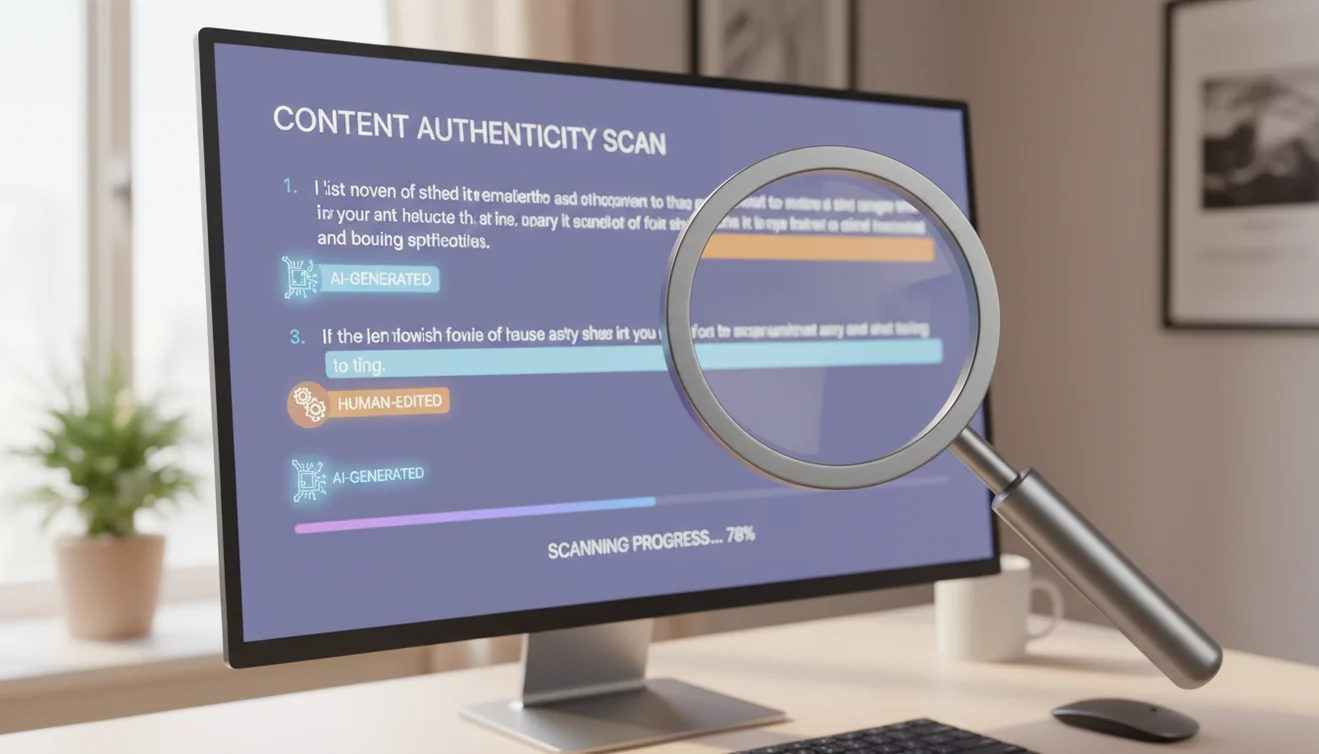
Most AI detectors are themselves machine learning models, trained on paired datasets of human-written and AI-generated text. During training, the classifier learns which features correlate with machine authorship. At inference time, your submitted text is tokenized and scored against those learned features. The output is a probability - say, 92% likely AI-generated - rather than a binary yes or no.
Here's what they actually measure. Perplexity tracks how "surprised" a language model would be by the text. AI-generated content tends to have low perplexity because the same model that wrote it would predict most of its words easily. Human text surprises the model more because people make unexpected word choices, use slang, shift registers mid-paragraph. Burstiness captures variation - humans write in bursts of long and short sentences, complex and simple structures. AI flattens that curve.
The practical accuracy is decent but imperfect. On clean, unedited AI output of 300+ words, leading detectors score above 90% accuracy. But the numbers drop fast once the text has been edited, paraphrased, or run through an AI Humanizer. Short texts, technical writing, and non-native English writing produce more false positives. The tools are useful as indicators, not courtroom evidence.
Real-World Use Cases
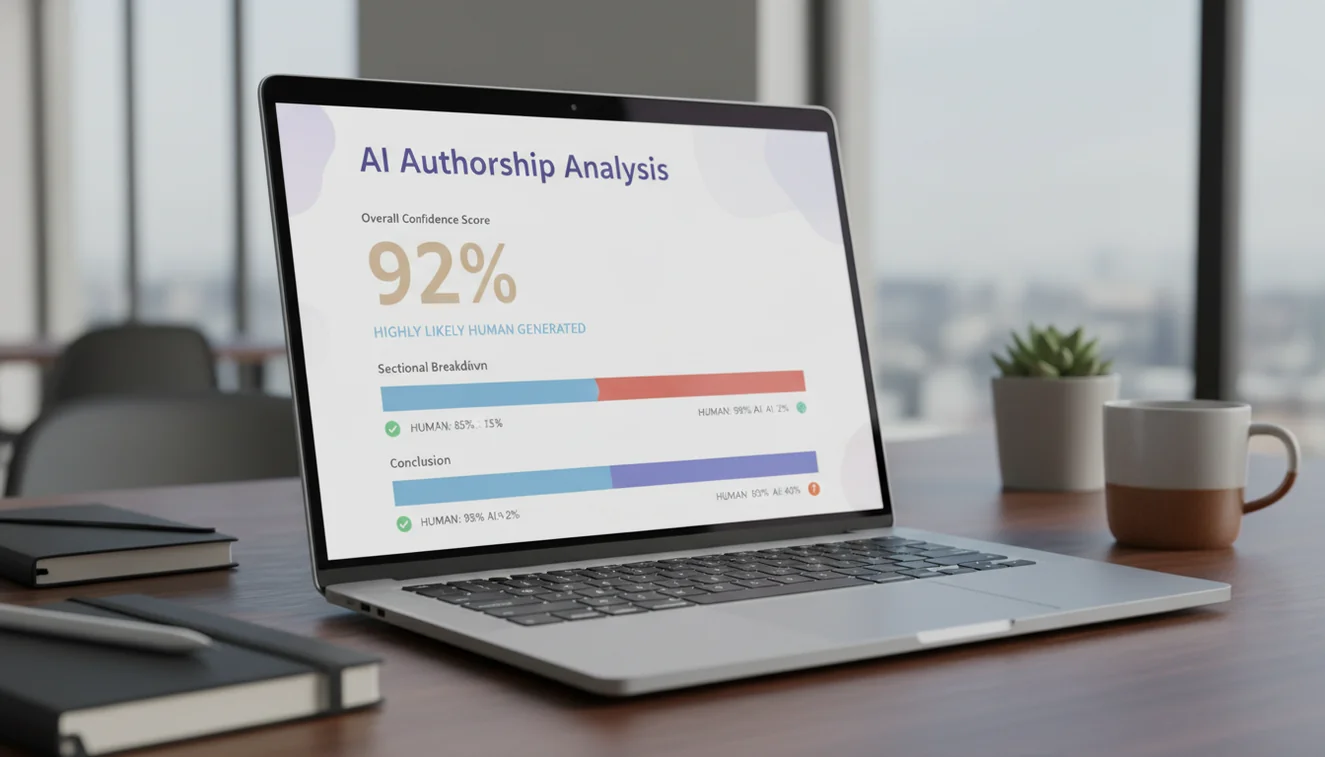
I've used AI detectors nearly every day for two years now, and the honest assessment is: they're a sanity check, not a verdict. In content marketing, I run every freelancer submission through detection before paying. Not because a high score means they cheated - some writers legitimately produce clean, structured prose that triggers detectors. But a 98% AI score on a 1,500-word article is worth a conversation. The tool surfaces questions; the editor makes the call.
Academic institutions use AI detectors as part of integrity workflows. Turnitin integrated AI detection directly into its plagiarism platform, which means millions of student papers are now screened automatically. The controversy is real - false positives have led to wrongful accusations, particularly against ESL students whose writing tends to be more formulaic. Responsible use means treating detector output as one data point, not a conviction.
SEO professionals monitor their own content pipelines. Google has stated that AI-generated content isn't automatically penalized, but low-quality, mass-produced AI text can hurt rankings. Running detection internally helps teams gauge where their content sits on the human-to-AI spectrum and decide whether additional editing is needed. The AI Chat tools on ChatGOT make it easy to detect and then humanize in the same workflow.
Limitations and the Detection Arms Race
AI detection is not a solved problem. Every limitation matters if you're relying on these tools for decisions. False positives flag human text as AI. False negatives miss AI text that's been lightly edited. Short texts below 150 words produce unreliable results. Domain-specific writing - legal briefs, medical reports, code documentation - often reads as AI because it's inherently formulaic. And non-English detection is significantly less developed.
The arms race between detectors and humanizers means both sides continuously improve. Humanizer tools study what detectors measure and optimize against those signals. Detectors then retrain on humanized text. Neither side wins permanently. Watermarking - embedding invisible statistical markers in AI output at generation time - is the most promising long-term solution. OpenAI, Google, and others are researching it, but widespread adoption hasn't happened yet.

Who Actually Needs AI Detection
If you manage freelancers or a content team, you need it. Not because AI-assisted writing is inherently bad - it's the norm now - but because there's a difference between a writer who uses AI to overcome a blank page and one who pastes a prompt, hits generate, and invoices you for the output. Detection gives you a data point to start that conversation. Editors at publishing houses use it to spot submissions that bypass the editorial process entirely. HR departments screen cover letters and writing samples when hiring for communication-heavy roles.
Teachers face the hardest version of this problem. A student who uses AI Chat to understand a concept and then writes in their own words is learning. A student who submits raw AI output is not. The detector can't tell you which scenario you're looking at - it can only flag the statistical fingerprint. That's why experienced educators treat detection scores as conversation starters, not verdicts. The tool raises a flag; the instructor investigates.
Common Mistakes When Using AI Detectors
The most damaging mistake is treating a detection score as binary proof. An 87% AI probability does not mean the text was definitely AI-generated. It means the writing patterns match what the detector associates with machine output. Formulaic human writing - legal briefs, technical manuals, standardized test responses - routinely triggers false positives. Non-native English speakers get flagged disproportionately because their writing tends toward simpler, more uniform structures that overlap with AI patterns. Before acting on a detection result, consider the context, the writer's background, and whether the text was edited after generation. Running the same text through the AI Humanizer and then re-detecting it demonstrates how fluid these scores really are.
AI Detector App
ChatGOT's AI detector is free on the web and available through the native iOS app with unlimited detection requests. The mobile app includes history tracking, batch analysis, and a streamlined paste-and-detect workflow built for speed. Download the AI Chat app for unrestricted AI detection on your phone or tablet.