
What Is an AI Identifier
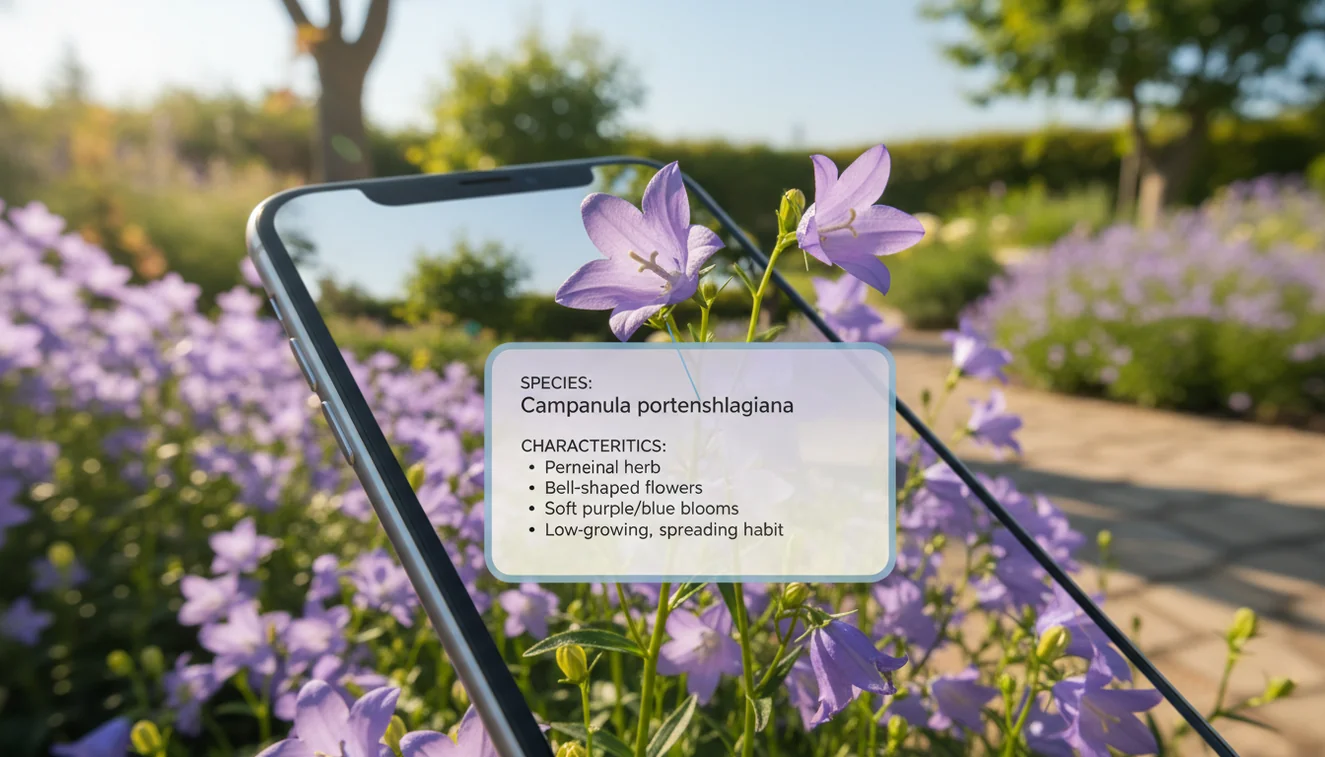
An AI identifier is a visual recognition tool powered by multimodal AI models that can analyze photos and tell you what's in them. Upload an image of a bird, a building, a plant, a piece of machinery, or a foreign-language sign, and the AI will identify it, provide context, and answer follow-up questions. The technology combines computer vision with large language models - the vision component processes what's in the image, and the language component explains it in natural, useful detail.
This isn't the basic image search you're used to. Google Lens matches your photo against an index of existing images. An AI identifier actually interprets the visual content and generates an original, contextual response. Ask "what species is this butterfly?" and you don't get a list of web links - you get an answer like "That's a Painted Lady (Vanessa cardui), one of the most widespread butterfly species globally, commonly found in gardens and fields across North America and Europe." Then you can ask follow-up questions. That conversational depth is what makes AI identification genuinely useful rather than a novelty. Identification accuracy depends on image quality, and misidentifications can occur with rare species or safety-critical subjects like toxic plants and venomous animals.
How AI Photo Identification Works
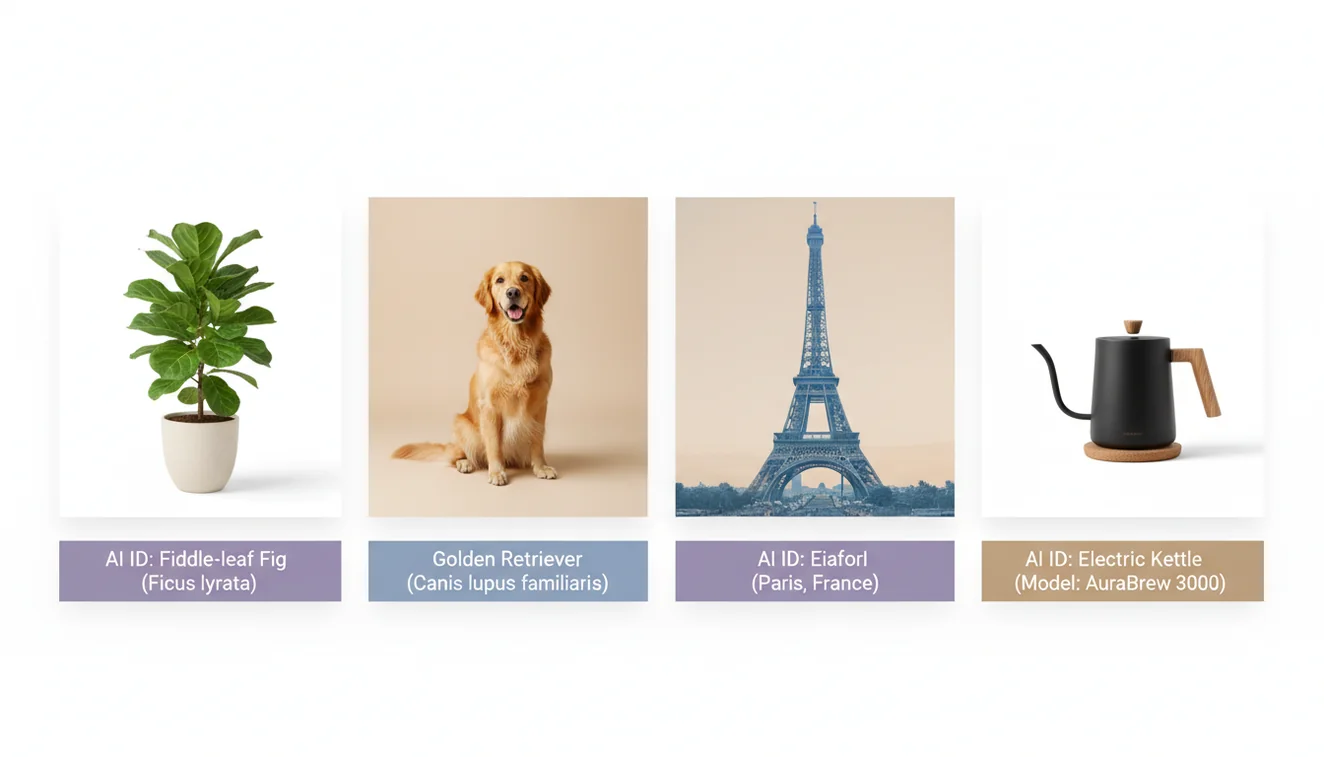
When you upload an image, the AI processes it through a vision-language model that has been trained on millions of image-text pairs. The model identifies visual features - shapes, colors, patterns, textures, spatial relationships - and maps them to concepts it learned during training. It recognizes a golden retriever the same way you do: by associating a cluster of visual features (fur color, ear shape, body proportions) with a learned category. But it does this across millions of categories simultaneously, which is why it can identify an obscure insect species as easily as a common dog breed.
The conversational layer is what separates this from a simple classifier. After identification, you can ask "is this plant toxic to cats?" or "what's the architectural style of this building?" or "translate the text on this sign." The AI doesn't just label what it sees - it provides context, explains significance, and handles follow-up questions that build on the initial identification. That's the practical difference between a classification tool and an AI-powered visual assistant. Try AI Chat for broader conversations, or use the identifier when you need the AI focused specifically on visual content.
What You Can Identify With AI
The range is broader than most people expect. Animals and plants are the obvious starting point - birds, insects, flowers, trees, mushrooms, fish, dog breeds, cat breeds. But the AI also handles architecture (identifying building styles, historical periods, specific landmarks), food (ingredients, dishes, cuisine origins), vehicles (make, model, approximate year), artwork (artist, style, period), electronics (product identification), clothing (brand, style, fabric), minerals and rocks, musical instruments, tools, and more. I've tested it with everything from a photo of a weird bug on my window screen to a picture of a church in Portugal, and the accuracy is consistently better than I'd expect.
Text recognition is an underrated capability. Upload a photo of a foreign-language menu, a handwritten note, a product label, or a street sign and the AI reads the text, identifies the language, and provides a translation or explanation. This alone makes the tool worth bookmarking for travel. The Identify Anything with AI guide covers broader visual AI concepts, while Apple Visual Intelligence explains how iPhone's native visual AI compares to third-party tools.
Limitations of AI Visual Identification
The AI is not infallible, and this matters more for identification than for most other AI tasks. Misidentifying a plant as edible when it's toxic, or telling someone a spider is harmless when it's not - these are real risks. The AI generally handles common species accurately, but rare subspecies, regional variants, and look-alikes can trip it up. Use AI identification as a starting point for further research, not as a definitive field guide. If safety is involved - edible versus poisonous, venomous versus harmless - always verify with a domain-specific resource.
Image quality has a direct impact on accuracy. Blurry, poorly lit, or heavily cropped photos produce unreliable results. The AI needs to see the subject clearly to identify it correctly. Distant subjects, extreme angles, and obstructed views all reduce accuracy. Similarly, the AI reflects the biases in its training data - it identifies species common in well-documented regions more accurately than those from under-represented areas. For niche identification needs, specialized tools (like iNaturalist for wildlife or PlantNet for botany) may outperform a general-purpose AI identifier on edge cases.
Getting Better Results From AI Identification
Photo quality is the single biggest factor in identification accuracy, and most people underestimate how much it matters. Shoot in natural daylight whenever possible. Get close enough that the subject fills at least a third of the frame. Avoid heavy shadows, motion blur, and extreme angles that obscure distinctive features. For plants, include leaves, stems, and flowers in the same shot - a single petal isn't enough for reliable identification. For animals, a clear side profile outperforms a head-on close-up because body proportions carry more taxonomic weight than facial features alone.
Equally important is knowing what the AI identifier handles well versus where it falls short. It excels at common species in well-photographed regions, manufactured products with visible branding, architectural styles, and printed text in major languages. It struggles with juvenile organisms that haven't developed adult markings, heavily weathered or damaged objects, subspecies distinctions that require geographic context the photo doesn't provide, and cursive or degraded handwriting. Treating the AI as a strong first filter - accurate enough to narrow your search, not authoritative enough to stake your safety on - is the right mental model.
AI Identifier App
The ChatGOT app puts AI identification in your pocket. Snap a photo, upload it instantly, and get identification results while you're still looking at the subject. Whether you're on a hike wondering about a plant, at a restaurant trying to identify a dish, or traveling in a country where you can't read the signs - the mobile experience removes the friction between seeing something and understanding it. Download the AI Chat app for unlimited AI identification with no daily message limits.