
What Does Ask AI Mean
Ask AI is exactly what it sounds like: you type a question, and an artificial intelligence system generates an answer. No list of blue links. No ads above the fold. No scanning three different articles to piece together what you actually wanted to know. The AI reads your question, processes it through a large language model, and returns a direct response written in natural language. It works for factual lookups, conceptual explanations, creative brainstorming, step-by-step instructions, and everything in between.
The shift from "search for it" to "ask AI" has been one of the most significant changes in how people find information since Google launched. Search engines still matter - especially for real-time news, product reviews, and anything that requires source verification. But for the kind of questions where you just want a clear, synthesized answer without clicking through ten tabs, asking AI is faster and often more useful. The answer comes to you pre-assembled. Your job is to evaluate it, not excavate it. AI-generated answers may contain inaccurate or incomplete information. Users should verify important responses against reliable, authoritative sources.

How Ask AI Works on ChatGOT
Type your question into the box above and hit send. The system routes your message to an advanced language model, which processes the input alongside any prior conversation context and generates a response. The whole cycle - from keypress to answer on screen - takes a few seconds depending on response length and server load. There's no queue, no waiting room, no "your question has been submitted" holding page. It's a live conversation.
ChatGOT connects you to powerful AI models without requiring an account or payment. The free tier gives you a generous daily allowance - enough for real research sessions, not just a teaser. Questions can be simple ("what year did the Berlin Wall fall?") or complex ("compare the trade-offs between microservices and monolithic architecture for a startup with three developers"). The model adapts. Follow up with clarifications. Ask it to rephrase, simplify, or go deeper. The conversation is yours to steer.
What You Can Ask AI
Practically anything that has a text-based answer. People ask AI to explain scientific concepts, translate phrases, debug code, draft emails, summarize articles, compare products, plan trips, write cover letters, solve math problems, and generate creative writing prompts. The breadth is the point. You don't need a different tool for each task - you just need a good question.
The best results come from specific prompts. "Tell me about climate change" returns a generic overview. "Explain the three main feedback loops that accelerate Arctic ice loss, with one real-world example for each" returns something you can actually use. Context matters too. If you're a high school student, say so - the AI will adjust complexity. If you need the answer in bullet points, ask for bullet points. The model is flexible, but it can't read your mind. Meet it halfway with a clear question and you'll get a sharp answer.

Ask AI vs. Search Engines
Search engines index the web and rank pages by relevance. AI generates answers from patterns learned during training. These are fundamentally different approaches, and each has strengths. Google wins when you need real-time data, source citations, local results, or product comparisons backed by reviews. AI wins when you need a synthesized explanation, a rewritten paragraph, a step-by-step walkthrough, or an answer to a question that doesn't have a single dedicated webpage.
In practice, most people use both. You might ask AI to explain a concept, then Google the specific study it referenced to verify the claim. Or you might Google a topic first, find the information scattered across five sites, and then ask AI to consolidate it into a coherent summary. They're complementary, not competitive. The mistake is treating AI answers as fully verified - they aren't. The advantage is speed and clarity when you need a starting point fast.
Limitations of AI Answers
AI doesn't know what it doesn't know. That's the core problem. A language model will generate an answer to virtually any question, even when the correct response would be "I'm not sure" or "this requires a professional." Hallucination - the generation of false but plausible-sounding information - is a known, persistent issue across all major models. It happens less often on common topics and more often on obscure, recent, or highly specialized ones.
Knowledge cutoffs matter too. Most models are trained on data up to a fixed date and have no awareness of events after that point unless augmented with live search. Bias inherited from training data can skew answers on politically sensitive, culturally specific, or underrepresented topics. And privacy varies by platform - AI Chat providers may log your questions for improvement purposes, so avoid sharing personal, financial, or medical details you wouldn't want stored on a server.
Types of Questions That Work Best
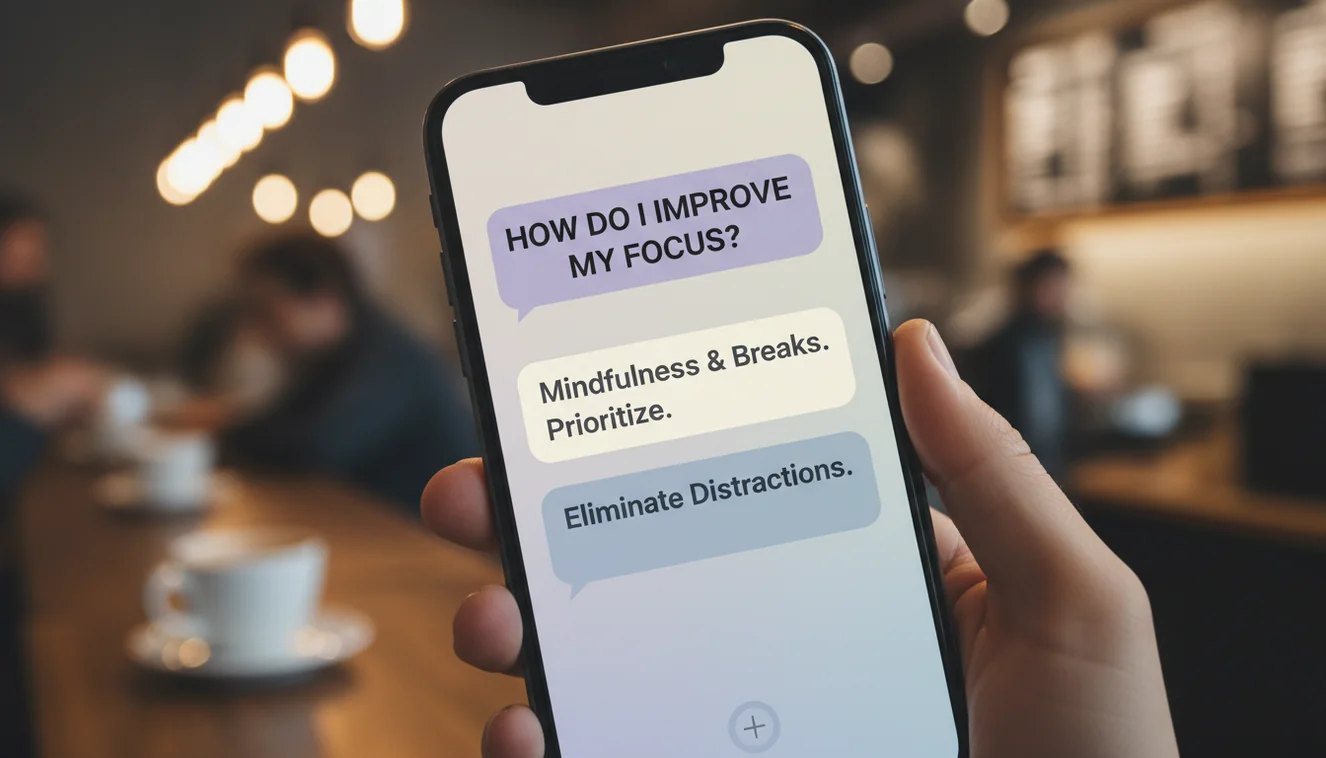
Not all questions are created equal when it comes to AI. Factual lookups with clear answers - dates, definitions, formulas - perform reliably. Conceptual explanations work well too: "how does mRNA vaccination work" or "explain the difference between TCP and UDP" consistently produce useful, well-structured responses. Comparative questions ("pros and cons of React vs Vue for a small team") tend to surface balanced perspectives that save you from reading five different opinion pieces.
Where questions underperform is anything requiring real-time data, deeply personal judgment calls, or niche expertise with limited training representation. Asking "what's the best restaurant near me" fails because AI has no location awareness. Asking for medical diagnoses crosses a line the model shouldn't be trusted on. The sweet spot is questions where you need synthesis, explanation, or a structured starting point - the kind of thing a well-read generalist could answer confidently.
Formatting Tips for Better Answers
Structure your question and the AI structures its answer. Ask for bullet points and you get bullet points. Request a table comparing three options and the model formats one. Specify "explain like I'm a beginner" or "assume I have a computer science background" and the complexity adjusts accordingly. Front-load the most important constraint - if you need a 200-word answer, say so upfront rather than asking the AI to trim afterward. The more explicit your format request, the less editing you'll do on the output. The AI Chatbot and AI Writer use the same formatting awareness, so these tips transfer across all ChatGOT tools.
Ask AI App
Need to ask AI on the go? The ChatGOT app puts unlimited AI question answering in your pocket. No daily caps, faster responses, and full access to every ChatGOT tool - including the AI Chatbot, Talk to AI, and AI Writer. Available for iOS with Android on the way.