
What Is an AI Humanizer
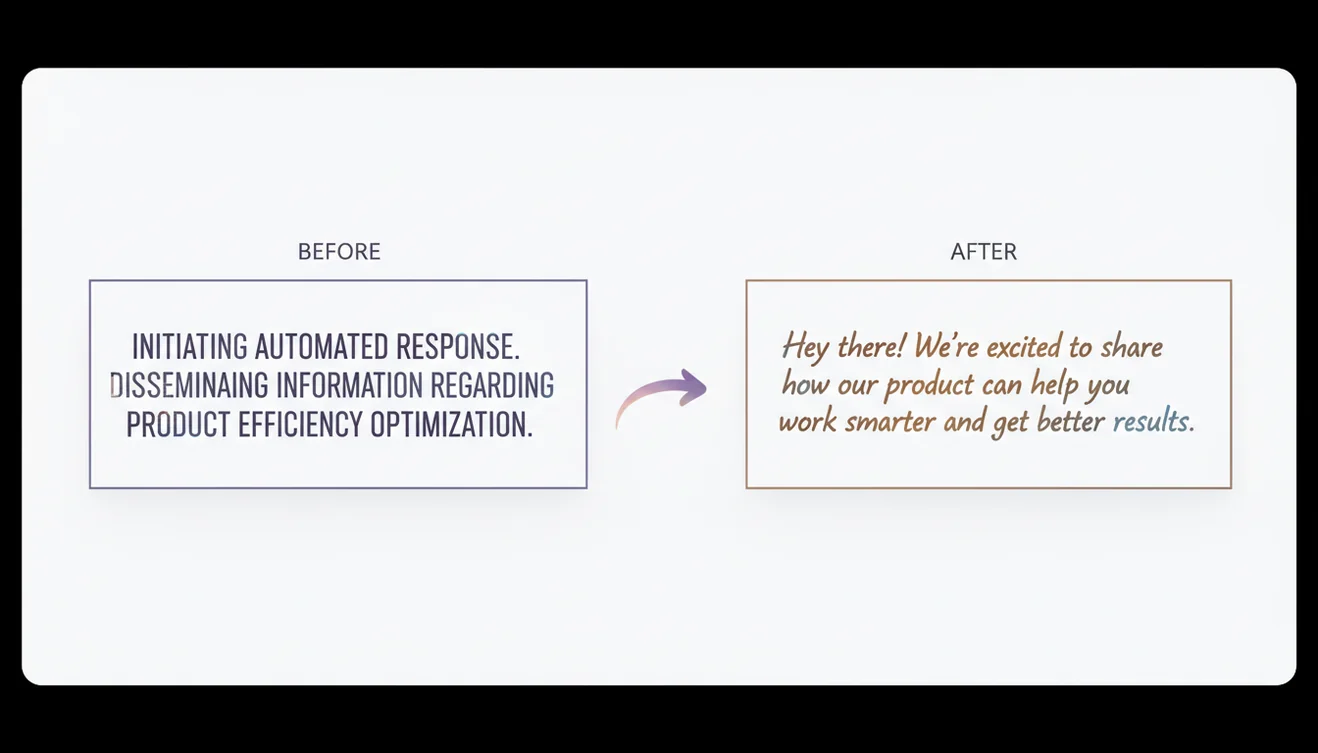
An AI humanizer is a tool that rewrites machine-generated text so it reads as though a human wrote it. It targets the specific linguistic patterns that AI detectors analyze - uniform sentence length, predictable transitions, low perplexity, and flat burstiness - and replaces them with the natural variation found in human writing. The original meaning and factual content are preserved while the delivery becomes more authentic. No humanizer guarantees complete bypass of all AI detection tools. Users should verify results with a detector and review output accuracy before publishing.
AI-generated text has a tell. Not always obvious to a reader, but visible to detection algorithms trained on thousands of samples. The sentences land at roughly the same length. Transitions follow a narrow set of templates. The vocabulary stays safe. An AI humanizer breaks those patterns deliberately, introducing the kind of imperfection and rhythm that comes from a person actually thinking through what they're saying.
How the AI Humanizer Works
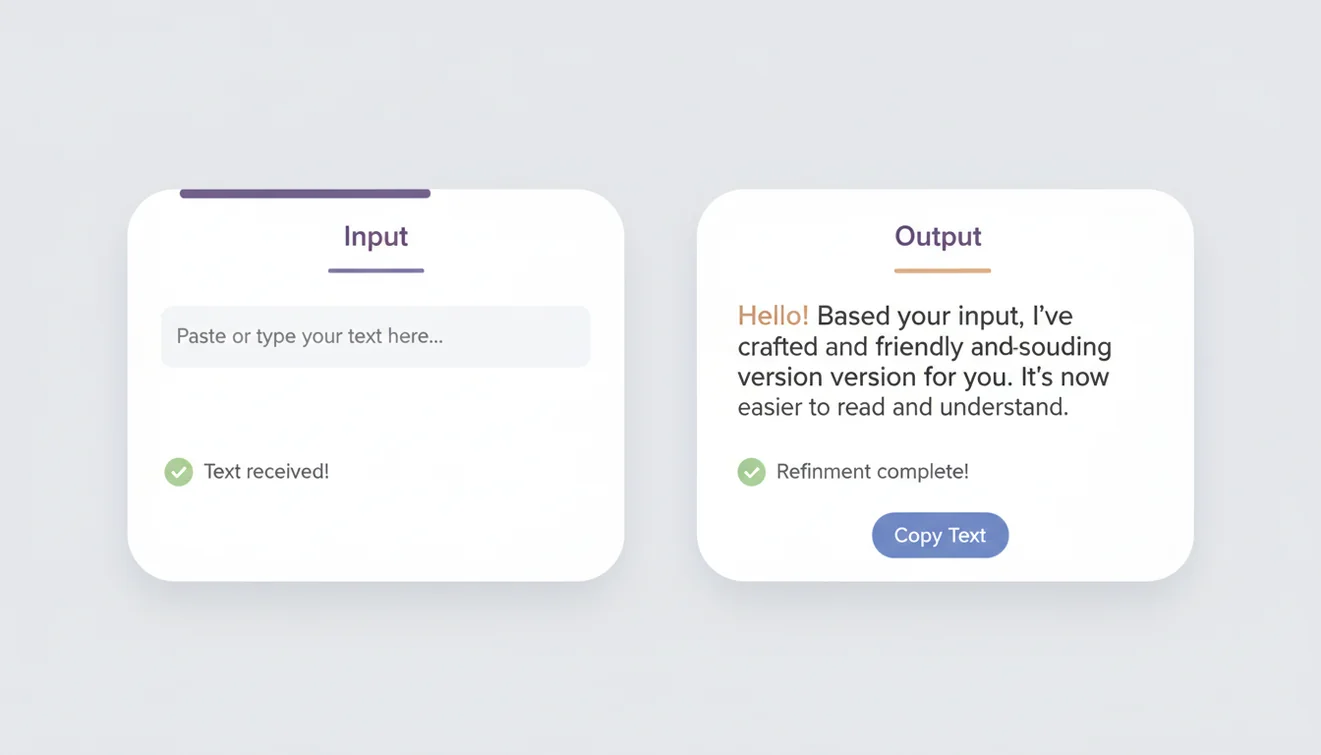
When you paste text into the AI Chat humanizer, the model first profiles the input for machine-generated signatures. It measures sentence length distribution, checks for overused connective phrases, and evaluates vocabulary diversity. Then it rewrites - not just swapping synonyms, but restructuring sentences, varying paragraph rhythm, and injecting the kind of casual precision that detectors associate with human authorship.
I've run hundreds of passages through humanizers over the past year. The ones that work well don't just scramble words. They understand that humans write in bursts - a long sentence followed by a short one, a fragment that breaks the flow on purpose, a parenthetical aside that a language model would never produce. Good humanization feels invisible. You read the output and it just sounds normal. The bad ones read like a thesaurus exploded on the page.
ChatGOT's humanizer processes each request through an advanced language model instructed to prioritize natural cadence over mechanical rewording. It considers the full context rather than working sentence by sentence, which preserves coherence across paragraphs. The output aims for a realistic blend of clarity and imperfection that mirrors genuine human writing.

When You Actually Need an AI Humanizer
Here's the thing nobody tells you: not all AI text needs humanizing. If you're writing internal documentation, drafting code comments, or generating product descriptions that will be edited anyway, running it through a humanizer adds a step that doesn't add value. The tool matters when the output will be evaluated - by a teacher, a publisher, a client, or an AI detection system with real consequences attached.
Content marketers use humanizers to polish AI-assisted blog posts before publishing. Freelance writers use them to clean up AI drafts before client delivery. Students - and this is where it gets ethically complicated - use them to make AI-written assignments less detectable. The tool itself is neutral. The context determines whether it's a productivity shortcut or academic dishonesty. Knowing the difference is on you.
Business use cases are straightforward. You need to produce volume. AI generates the first draft. A humanizer smooths the machine fingerprint. A human editor does the final pass. That workflow saves hours per week without sacrificing quality or triggering content filters. It's not about deception - it's about efficiency in a world where AI-assisted writing is the norm.
Limitations Worth Knowing
No humanizer is perfect. Very short text - a single paragraph, a tweet-length blurb - gives the model too little to work with. There's not enough room for the structural variation that fools detectors. Highly technical text with domain-specific jargon can also trip up the rewriter, producing awkward phrasing that a subject matter expert would catch immediately. And some detectors update their models faster than humanizers adapt.
The arms race between AI detectors and humanizers is real. Detector companies train on humanized text. Humanizer tools adjust to new detection methods. The cycle continues. What works today against GPTZero might not work next month against their updated model. Treating any humanizer as a guaranteed solution is a mistake. Treat it as a useful layer in a multi-step editing process. Run the AI Detector on your humanized output to verify scores before publishing.
Why AI Text Sounds Like AI
It comes down to how language models generate text. They pick the statistically most likely next word, over and over. The result is prose that's grammatically clean but rhythmically flat. Every sentence lands in a narrow length range. Transitions rely on a handful of templates - "furthermore," "additionally," "it's worth noting." Vocabulary stays in the safe middle: common enough to be correct, never strange enough to be interesting. Humans don't write that way. We vary. We fragment. We start a sentence and change direction halfway through because a better idea showed up. That messiness is what detectors look for, and what humanizers try to replicate.
The Ethics of Detection Evasion
This is the part most tool pages skip, so let's be direct. Using an AI humanizer to polish content for your business blog? Standard practice. Humanizing an AI-drafted marketing email so it reads naturally? Nobody blinks. Running a student essay through a humanizer to dodge Turnitin's AI Detector? That's academic dishonesty at most institutions, regardless of what the technology allows. The tool doesn't make the ethical call - you do. Professional contexts where AI-assisted writing is accepted and disclosed are the intended use case. If your use case requires hiding the fact that AI was involved, that's a signal worth examining honestly.
AI Humanizer vs Alternatives
Manual editing is the oldest alternative, and it still works. A skilled editor who understands what detectors measure can rewrite AI text by hand in about the same time a humanizer takes automatically. The difference is scale - you can humanize ten articles in the time it takes to manually edit one. Paraphrasers like QuillBot swap words but don't address the deeper structural patterns that detectors flag. Dedicated humanizers target those patterns specifically: sentence length variance, vocabulary diversity, and the irregular cadence of genuine human thought. For most content workflows, the efficient path is generating with the AI Text Generator, humanizing the output here, and then doing a final human review.
AI Humanizer App
ChatGOT's AI humanizer is available free on the web and through the native iOS app. The mobile app offers unlimited humanization requests, offline access to recent results, and a streamlined interface designed for quick paste-and-humanize workflows. Download the AI Chat app for unrestricted access on your phone or tablet.