
What Is AI No Filter
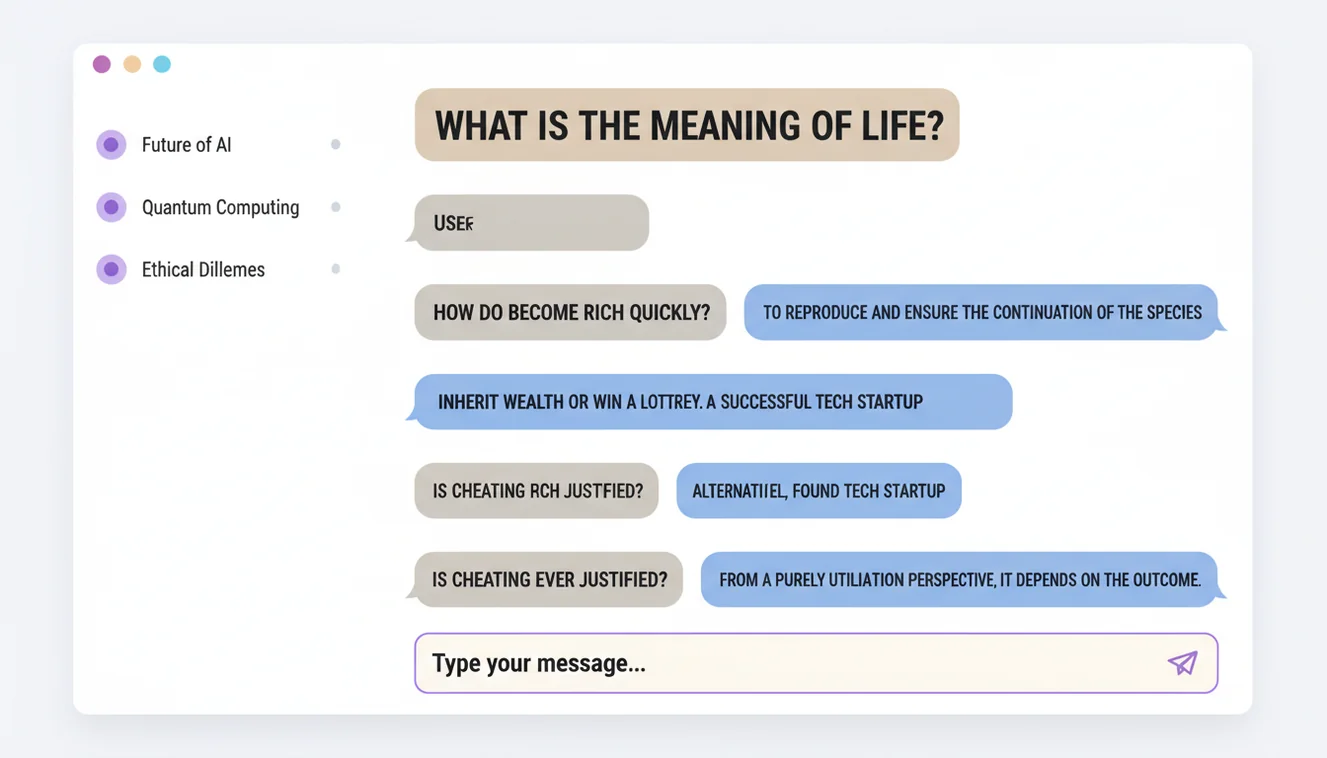
AI no filter is a chat mode designed for users who want straight talk from an AI without the layers of qualifiers and diplomatic softening that most chatbots default to. Standard AI assistants are tuned to be safe above all else, which often means burying the actual answer under paragraphs of "it depends" and "there are many perspectives." That caution has a place. But when you just need a clear answer - what's the best option, what are the real downsides, is this idea actually good - the hedging gets in the way. Direct delivery does not equal factual accuracy - the AI can still produce errors and should not be relied on for medical, legal, or financial decisions.
The no-filter approach doesn't mean the AI has no rules. It means the communication style shifts from corporate-safe to candid. I've used AI tools across a dozen platforms, and the single most frustrating pattern is asking a direct question and getting four paragraphs of context before the AI finally commits to an answer buried in the last sentence. AI Chat without the filter flips that - answer first, context if you ask for it. That's what this tool delivers.

How Unfiltered AI Chat Works
The underlying language model is the same one powering all ChatGOT tools. What changes is the system prompt - the set of instructions that shape how the AI responds. In no-filter mode, those instructions prioritize brevity, directness, and honest assessment over cautious neutrality. The AI still pulls from the same training data and reasoning capabilities. It simply packages the response differently.
Think of it this way. Ask a regular AI "Should I learn Python or JavaScript first?" and you'll get a balanced essay covering both languages with no clear recommendation. Ask the no-filter AI the same question and you'll get: "Python if you want data science or automation. JavaScript if you want web development. Pick based on what you're actually building, not what's trending on Reddit." Same knowledge, different delivery. The directness saves time when you already have context and just need the verdict.
Use Cases for Direct AI Chat
Product comparisons are where this mode shines. "Is Notion better than Obsidian for personal note-taking?" Most AI tools will list features of both and end with "it depends on your needs." The no-filter version tells you what most users actually prefer and why, then flags the specific scenarios where the other option wins. You get a recommendation in 10 seconds instead of a balanced essay you have to interpret yourself.
Honest feedback on writing, business ideas, and creative work is another strong use case. People ask AI for opinions and get empty validation because the model is trained to be supportive. No-filter mode points out what's weak alongside what works. Debate preparation, understanding opposing viewpoints, and getting blunt explanations of complex topics all benefit from this style. Writers use it to cut through their own blind spots. Founders use it to stress-test pitches before presenting to actual investors. The common thread is that you're looking for signal, not comfort. Talk to AI works well when you want a more conversational feel, while this mode is for getting to the point fast.
What "No Filter" Does Not Mean
Let's be clear about boundaries. AI no filter does not mean AI without ethics. The tool will not generate instructions for weapons, drugs, or illegal activity. It will not produce content sexualizing minors. It will not help with harassment, doxxing, or fraud. Those boundaries exist because they should - not because the AI is being overly cautious, but because that content causes real harm. Direct communication and dangerous content are completely separate categories.
Some people search for "AI without restrictions" hoping to find a chatbot that will do literally anything. That doesn't exist on any responsible platform, and if you find one, the quality will be garbage because building a good model requires the kind of investment that only comes with some level of content policy. What you're actually looking for, in most cases, is an AI that doesn't treat you like a liability. That's what ChatGOT no-filter mode provides - respect for your intelligence paired with responsible output.
Why Filters Exist - and When They Get in the Way
Content filters in AI systems exist for legitimate reasons. Without them, language models will happily generate instructions for dangerous activities, produce targeted harassment, and create convincing misinformation at scale. The problem isn't that filters exist - it's that most platforms calibrate them for the most cautious possible interpretation of every query. Ask a standard AI about medication interactions and you'll get five paragraphs of "consult your doctor" before any actual information. That's not safety - that's liability management dressed up as responsibility.
Direct answers matter most when time is scarce and context is clear. A developer debugging production at 2am doesn't need a preamble about best practices. A founder deciding between two pricing strategies needs the trade-offs laid out plainly, not a balanced essay that avoids picking a side. A student trying to understand a concept needs the clearest explanation available, not a hedged version that protects against every possible misunderstanding. The no-filter approach recognizes that most adults asking questions already have context - they want signal, not insulation. Safety guardrails for genuinely harmful content should be rigid. Tone-policing for everyday questions should not.
Limitations Worth Knowing
Directness doesn't equal accuracy. The AI is still working from training data with a knowledge cutoff, still capable of hallucinating facts, and still prone to overconfidence on topics outside its strong suit. A direct wrong answer feels more trustworthy than a hedged wrong answer, which is actually more dangerous. Don't confuse confidence in delivery with correctness. Verify claims independently when the stakes matter.
The no-filter mode also doesn't mean the AI has secret knowledge that standard mode withholds. The information base is identical. Some topics genuinely require nuance - "is this mole cancerous" doesn't have a direct AI answer, and pretending it does would be irresponsible. The model knows when to push back, and that's a feature. A tool that always tells you what you want to hear is less useful than one that's honest about what it can and can't do.
AI No Filter App
The ChatGOT no-filter chat is available free on the web and through the iOS app. The mobile app removes the daily message limit so you can get direct answers anytime - commuting, in meetings, late at night when you need a quick no-nonsense response. Download the AI Chat app for unlimited access to no-filter AI chat on your phone.