
Ask AI What an Old Object Is, Then Verify the Answer
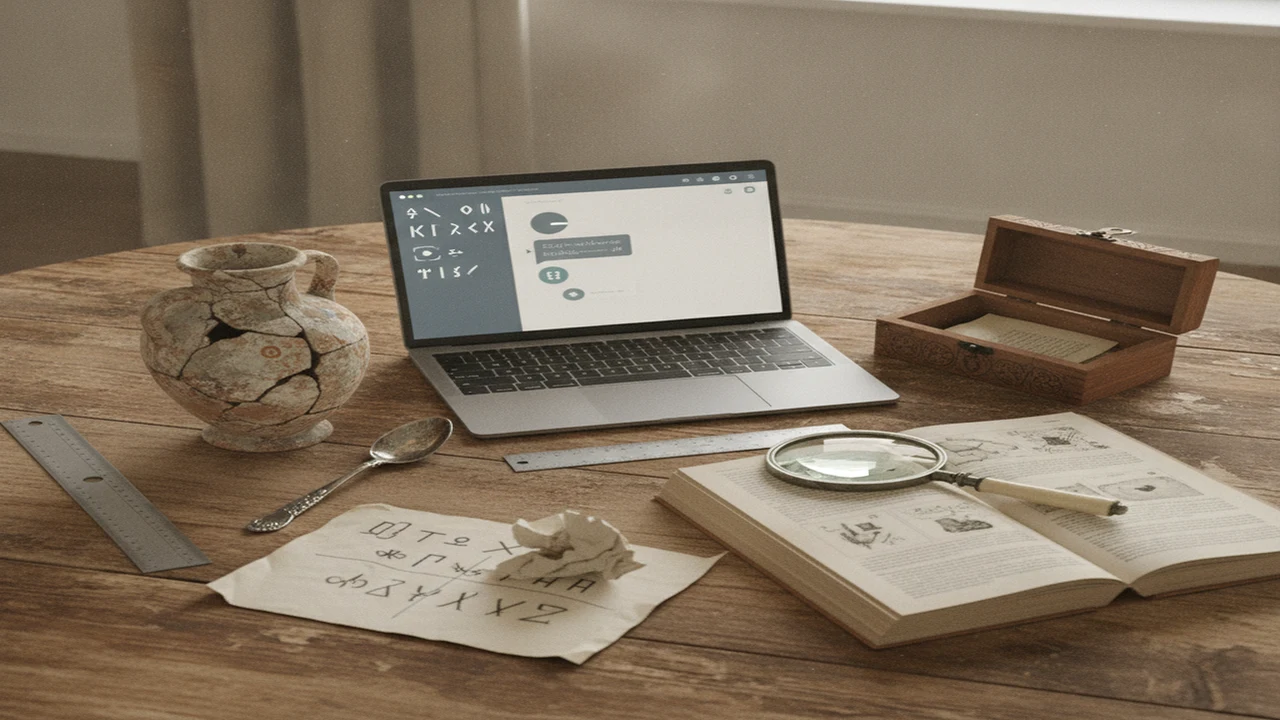
A chatbot can look at a ceramic mark, unfamiliar chair joint, silver stamp, or faded label and produce a plausible explanation in seconds. The useful part is not the confident-sounding name. It is the vocabulary, candidate categories, and follow-up questions that help you begin proper research.
The safest workflow keeps observation separate from inference. Give the AI strong visual evidence, ask for alternatives, compare another model, and then leave the conversation to check references and market records.
Quick answer: AI chat can turn photographs, marks, materials, dimensions, and provenance notes into a useful identification hypothesis. Check that hypothesis against visual matches, maker references, museum records, sold listings, and specialist evidence. Identification names the object, market research estimates current value, authentication evaluates whether it is genuine, and a formal appraisal provides documented professional valuation.
What can AI reliably tell you about an old object?
AI chat is useful for generating candidate object categories, likely materials, broad periods, possible regions, and maker-search terms. It can explain why a dovetail joint matters, suggest how to read a ceramic backstamp, or identify the general form of a silver hallmark.
Keep four outputs separate. An identification hypothesis proposes what the object might be. Historical background explains its likely context. An antique market value range summarizes comparable transactions. Authentication asks whether the age, maker, material, and components are genuine.
An antique identifier by picture cannot establish age, authorship, or authenticity from appearance alone. Furniture hardware may have been replaced, ceramic marks can be copied, signatures can be added, and silver-colored material may not be precious metal. Use the answer to decide what evidence to inspect next.
How should you photograph the object before asking AI?
Capture the complete object from the front, back, underside, side, and profile. Add separate close-ups of damage, fasteners, joints, labels, signatures, stamps, and hallmarks. Include a ruler or another unambiguous scale reference.
Use diffuse light, sharp focus, and a neutral background. Avoid beauty filters and compressed collages. Reflective silver, glazed ceramics, dark furniture, and tiny stamped marks often need angled light and several exposures before lettering becomes readable.
Record dimensions, weight when relevant, apparent materials, where the object was found, and any family story. Label family history as reported information rather than verified provenance. Antique Identifier TIQ is one example of a photo-led path, but the quality and completeness of the evidence still shape the research.
- Photograph the full object, all sides, construction details, marks, and damage.
- Measure its height, width, depth, diameter, and weight where relevant.
- Describe materials, condition, acquisition location, and unverified family history.
What prompt should you use to identify an old object?
A useful prompt requests evidence and uncertainty instead of one confident label. Attach the images separately and write: “Analyze this old object using only visible evidence and the details I provide. Object type: unknown. Apparent material: [material]. Dimensions and weight: [details]. Visible marks: [transcription]. Construction and condition: [details]. Found in: [location]. Return up to three candidate identifications. For each, list evidence for and against, a likely date range, possible maker or region, missing photographs, and exact search phrases. Separate observation from inference. Quote letters conservatively and say when a mark is unreadable.”
For antique furniture identification, follow with: “Compare the joints, saw marks, fasteners, hardware, wood grain, underside, and evidence of replacement parts. What observable feature would distinguish the leading candidates?” For antique silver identification, ask: “Transcribe each hallmark separately. Distinguish maker, assay office, date letter, standard mark, and decorative symbol without assuming metal purity.”
When repeated image descriptions make chat cumbersome, a focused workflow can help you Identify Antiques and collect visual leads before returning to the conversation. The Search Antiques by Photo guide explains how focused photo search differs from broad reverse-image matching; neither method provides a formal appraisal or physical authentication.
- Prompt the model for multiple candidates, contrary evidence, missing views, and verification terms.
How do you compare answers from multiple AI models?
Send the same photographs, measurements, mark transcription, and neutral prompt to two models. Changing the evidence between conversations makes differences harder to interpret.
Compare the proposed identity, period, material, mark reading, confidence language, and requested photographs. Agreement is a research lead, not independent confirmation, because models can recognize similar visual patterns or repeat common online descriptions.
Use a reconciliation prompt: “Model A and Model B disagree on the following claims: [list]. For each disagreement, name the observable feature or outside record that would separate the candidates. Do not choose a winner without evidence.”
- Compare both answers claim by claim using the evidence table.
How do you verify the proposed identity outside the chat?
Transcribe marks exactly, search distinctive phrases in quotation marks, and compare construction, proportions, and dimensions. Then inspect dated maker references, museum catalogues, trade records, and objects with documented origins. A photo match should also align on material, marks, manufacturing details, and period.
Google Lens is a broad starting point for visual matches. Curio - Antique Identifier is a focused option that may provide historical background and visually similar listings. Comparable objects and historical information are research leads, not certified appraisals. Antique Identifier TIQ offers another focused route for organizing a candidate identity.
A published overview of AI antique identification likewise frames chatbot output as the beginning of research. For choosing between broad chat and structured scanning, see how scanner apps and chatbots handle values, history, and marks.
- Transcribe every visible mark without silently correcting uncertain letters.
- Search exact phrases, mark combinations, maker references, and image matches.
- Verify the candidate against dated records and matching construction details.
How do you check what the object may be worth?
Separate asking price, sold price, auction estimate, dealer retail, insurance value, and formal appraisal. To build an antique market value range, compare completed sales with the same maker or attribution, material, dimensions, age, condition, completeness, and sale region.
WorthPoint is an optional historical-sales source. Its 2023 platform metrics reported more than 1.4 billion archived prices. eBay reported that more than 450 million collectibles listings were created on its marketplace in 2023. Those figures show the scale of searchable market data, but individual comparables still need careful filtering.
AI chat can normalize records into columns for sale date, venue, dimensions, condition, attribution, price, and fees. Tell it to preserve blanks and never invent sales or missing prices. A generic antique value checker or antique price guide may produce an overly broad range when the identity is uncertain. Antique Identifier TIQ can help organize the candidate identity before this market comparison.
- Value the object from verified sold comparables rather than isolated asking prices.
When should you stop using chat and consult a dedicated tool or specialist?
A dedicated antique identifier app can be useful for structured photo capture, repeated searches, comparable-image discovery, and saving an antique collection. Move to a qualified antique appraiser, auction specialist, conservator, or relevant museum contact when the potential value is high, attribution is disputed, condition is complex, or written documentation is required.
Precious-metal marks, signatures, restorations, altered components, reproductions, and regional variations can defeat visual-only identification. Do not clean, polish, disassemble, repair, or remove labels before expert review because doing so may destroy evidence or affect value. Identification, valuation, and authentication remain separate jobs.
For a more detailed escalation decision, read when to leave AI chat for a specialist scanner.
- Image models can mistake reproductions, revival styles, replacement parts, and decorative marks for period evidence.
- A visually similar listing does not establish the same maker, age, material, condition, or market value.
- AI-generated maker names, dates, citations, and comparable sales must be checked against accessible sources.
- Photos cannot reliably reveal every restoration, structural defect, material treatment, or authenticity issue.
- Formal insurance, estate, tax, donation, or legal valuations require an appropriately qualified human professional.
What should your final research record contain?
Record the working identification, alternative candidates, measurements, mark transcription, photo list, provenance claims, condition notes, source URLs, comparable sales, date checked, and unresolved questions. Label every statement as observed, source-supported, seller-reported, AI-suggested, or unknown.
Preserve original photographs and screenshots of listings that may change or disappear. If you want to evaluate other tools for maintaining the record, the guide to antique research apps that work alongside AI chat covers broader workflow choices.
Use this final prompt: “Convert my notes into a concise object research record. Preserve my evidence labels, distinguish the working identification from alternatives, and list unresolved questions. Do not add facts, prices, sources, or citations that are absent from my notes.”
- Document the evidence, sources, uncertainty, comparable sales, and date checked.
Comparison
| Claim to compare | Model A answer | Model B answer | Visible evidence | Outside source needed | Status |
|---|---|---|---|---|---|
| Object category | Record candidate | Record candidate | Overall form and use | Catalogue or museum record | Open |
| Material | Record claim | Record claim | Grain, glaze, color, wear | Material inspection | Open |
| Maker or region | Name and reasoning | Name and reasoning | Label, mark, construction | Maker reference | Unverified |
| Estimated period | Range | Range | Hardware and style | Dated reference | Unverified |
| Mark or signature reading | Exact transcription | Exact transcription | Close-up photograph | Mark directory | Check |
| Construction clues | List observations | List observations | Joints and fasteners | Specialist reference | Check |
| Value range | Preserve cited basis | Preserve cited basis | Condition and completeness | Verified sold records | Pending |
Limitations
Frequently Asked Questions
Can AI identify an antique from one picture?
One picture may produce plausible candidates, especially when the object has a distinctive shape or mark. Multiple views, dimensions, close-ups, construction details, and verification through outside references are needed before accepting an identification.
What details should I include when asking AI about an old object?
Include the full object, front and back, underside, profile, dimensions, weight where relevant, materials, condition, joints, fasteners, labels, signatures, marks, acquisition location, and any family history clearly labeled as unverified.
Can an AI antique identifier tell me what an item is worth?
It can help assemble a market estimate from genuine comparable sales. It cannot turn uncertain identification or invented prices into a defensible valuation, and a market estimate is different from a certified appraisal prepared for insurance, estate, donation, tax, or legal purposes.
How is Antique Identifier TIQ different from asking a general chatbot?
Antique Identifier TIQ follows a focused photo-led research path, while a general chatbot is better suited to extended questions, terminology, alternative hypotheses, and source comparison. Some collectors use both stages in one workflow.
Is Google Lens enough to identify antiques by photo?
Google Lens is useful for broad visual discovery, but close-looking results may differ in maker, age, materials, proportions, or condition. Structured chat and specialist photo workflows can help turn those matches into more precise research questions.
Can Antique Identifier TIQ authenticate a maker signature or hallmark?
Antique Identifier TIQ may suggest a reading or candidate reference from an image, but image interpretation alone cannot authenticate authorship, establish metal purity, or detect every altered mark. Important findings need appropriate reference or specialist review.
What is the best app to identify antiques?
Choose according to evidence display, comparable records, saved-collection support, export options, privacy terms, pricing, and whether you need broad object recognition or antique-specific research. No single app should be declared the best antique identifier app without documented comparative evidence.
When do I need a professional antique appraiser?
Consult an antique appraiser when the object may be valuable, attribution is disputed, condition or restoration is complex, or a written valuation is needed. Auction specialists, conservators, grading services, and museum contacts may be more appropriate for particular materials or categories.