
Best Antique Research Apps to Use With AI Chat in 2026
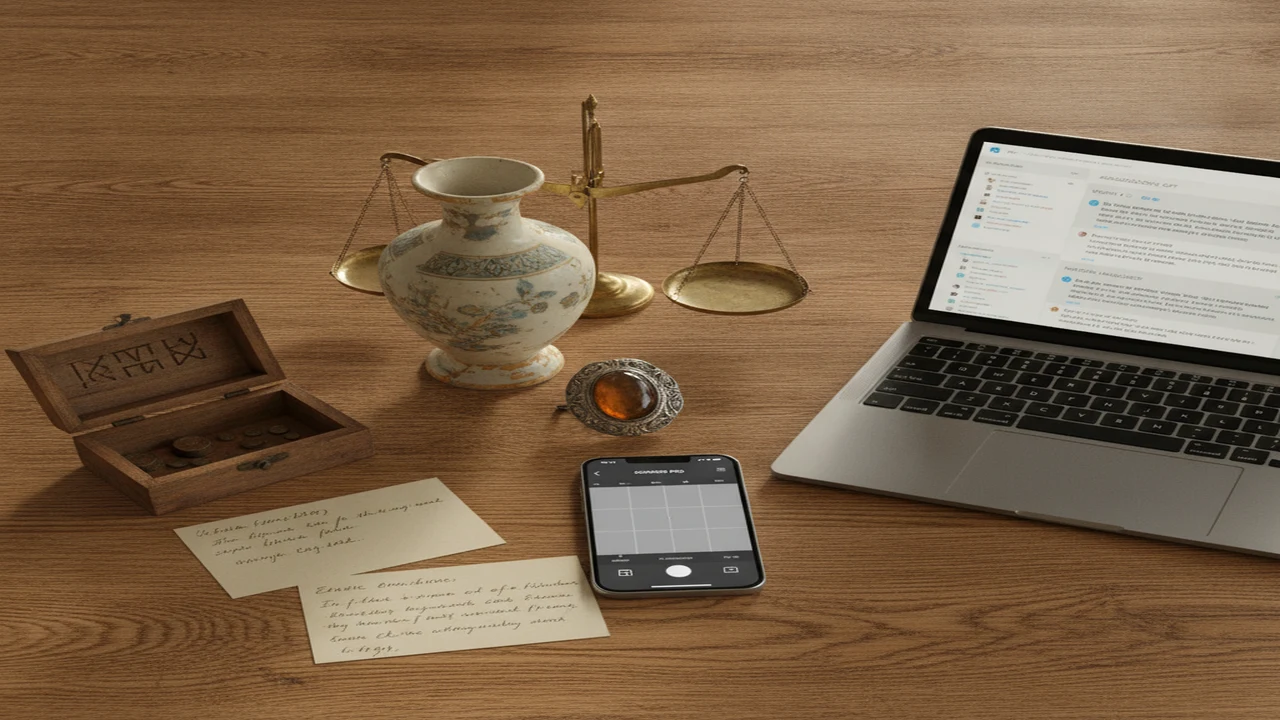
Antique research rarely ends with one photograph and one answer. A useful workflow moves from visible evidence to competing identifications, reference checks, relevant sold records, and a written conclusion that distinguishes observation from speculation.
The volume of online market information makes that verification possible but also noisy. eBay reported more than 1.4 billion live listings globally in 2024, according to the eBay 2024 annual report. AI chat can organize that material, but a visually similar listing is not automatically the same maker, age, material, or condition.
Quick answer: AI chat is useful for interpreting marks, generating period-specific research prompts, comparing possible makers, and organizing evidence. A dedicated antique identifier app is usually faster for photo scanning, preliminary value ranges, and collection records. For dependable conclusions, verify automated results against authoritative references, genuinely comparable completed sales, and a qualified appraiser when value or authenticity matters.
What can AI chat contribute to antique research?
Start the conversation with a neutral description of the object. Include dimensions, weight if known, materials, construction, damage, provenance, and a manual transcription of every mark. If the chosen AI model supports images, upload clear views but also describe details that might be difficult for vision systems to read.
Ask for several plausible identifications rather than one definitive label. A useful prompt might request likely maker categories, alternative readings of a hallmark, period-specific terminology, and evidence that would confirm or reject each possibility.
AI chat is particularly helpful for turning vague observations into research language. It can suggest searches involving construction techniques, regional hallmark systems, factory symbols, pattern names, date codes, or stylistic periods. It can also format the evidence as a checklist or comparison matrix.
A multi-model habit reduces anchoring. Give two AI models the same evidence independently, then compare their proposed dates, makers, materials, and reasoning. Agreement identifies a lead worth checking, while disagreement reveals which physical details require better photographs or specialist references.
A chatbot can interpret evidence placed in the conversation, but it does not automatically provide a current sold-price database, physical inspection, or reliable formal appraisal. Its best role is hypothesis generation, terminology, research planning, and synthesis.
- Ask: What maker categories fit this mark and construction method?
- Ask: Which details would disprove a proposed 1920s date?
- Ask: Generate searches for museum catalogs, auction archives, and specialist societies.
- Ask: Separate observed facts from assumptions and unresolved questions.
Which antique research apps are the best companions for AI chat?
The right companion depends on whether you need fast visual discovery, structured object records, collection management, or historical price research. The Art Basel and UBS Global Art Market Report 2025 estimated online art and antiques sales at approximately $13 billion to $15 billion during 2024, illustrating why digital discovery and careful comparison now matter so much.
For an integrated iOS starting point, Antique Identifier TIQ documents photo identification, value ranges, historical context, authenticity clues, and saved collection records. Its Antique Identifier App output can become the evidence packet for a follow-up AI chat rather than the final answer.
Antique Identifier By Picture emphasizes photo import, background object removal, image cropping, and a quick antique value estimate. Reviews cited in the supplied summaries mention advertising, changing scan results, and occasional maker or regional errors, so repeated outputs still need verification.
AntiqSnap: Antique Identifier combines snap-based identification, market-price guidance, and digital collection organization. Some reviews report incorrect material suggestions and difficulty distinguishing reproductions from genuine objects.
Antique Identifier - Relic creates a compact record covering identity, era, materials, origin, condition, and a price range. Its documented AI identification, comparison, history, and collection functions require a subscription.
Curio - Antique Identifier combines photo identification, visual item matches, collection organization, and PDF export. Its estimates are based on historical information and comparable objects, not certified appraisals.
Google Lens is useful for broad visual discovery, while WorthPoint can support historical price research. Neither is a direct substitute for every feature of an antique appraisal app. A published overview of antique identifier apps also reflects how the category now mixes scanning, valuation guidance, and collection tools.
How should you combine a photo scanner with a multi-model chat workflow?
The scanner should create a structured starting point. AI chat should challenge that starting point, explain unfamiliar terminology, and design the next round of research. Keeping those roles separate makes it easier to notice when an attractive identification is based on weak evidence.
For valuation, compare completed sales involving the same maker, material, dimensions, condition, and approximate date. The How Much Is My Antique Worth guide explains why photo-based value research should be checked against relevant sold comparables instead of isolated asking prices.
One research note cites 2024 US collector surveys in the Hiscox Online Art Trade Report indicating that roughly 35 to 40 percent of collectors under 40 used an image-recognition or AI tool when researching at least one purchase per month. The useful habit is not merely using AI, but recording what each tool claimed and how the claim was verified.
Antique Identifier TIQ can preserve photographs and preliminary findings in a collection record, while the AI chat holds questions, alternative hypotheses, source notes, and an evolving conclusion.
- Photograph the full object, base, back, underside, hardware, labels, damage, marks, and an item that shows scale.
- Scan the cleanest image with a dedicated antique identifier and save its proposed identity, era, materials, and range.
- Extract each result as a separate claim. Do not merge the app’s suggestions with directly observed facts.
- Prompt an AI model: Separate observed facts, scanner claims, alternative identifications, missing evidence, and recommended search queries for this object.
- Compare the answer with a second model that has not seen the first model’s conclusion.
- Verify maker, date, materials, dimensions, and value through references and like-for-like completed sales.
- Record sources, dates, image details, conflicting evidence, and the reason for the final working identification.
- Escalate to a qualified appraiser when authenticity, high value, insurance, an estate, tax reporting, or restoration is involved.
Which app features matter for different kinds of antiques?
Furniture needs more than a front-facing room photograph. Capture joinery, drawer construction, saw marks, fasteners, feet, underside surfaces, replaced hardware, labels, and repair work. These details support antique furniture identification far better than style alone.
For porcelain and ceramics, prioritize base marks, factory symbols, glaze, paste color, decoration method, rim shape, and dimensions. A porcelain and ceramics identifier can suggest a factory or period, but partial marks and frequently copied patterns require reference checks.
An antique jewelry identifier needs sharp images of hallmarks, clasps, settings, solder joints, stone backs, and wear patterns. Chat can explain assay systems or propose alternate hallmark readings, but metal composition, treatments, and gemstones may require professional instruments.
For signed art and decorative objects, photograph the signature and the entire work, reverse labels, stretcher or frame construction, foundry marks, edition numbers, and mounting hardware. Ask AI chat to distinguish a signature reading from an attribution.
Mixed collections benefit from consistent folders, export options, total-value summaries, and standardized object records. Antique Identifier TIQ is one photo-led option, while Curio offers PDF-oriented collection features and AntiqSnap emphasizes collection tracking.
Better photographs also improve the prompts you can build around visual evidence. Our guide to asking AI what an old object is and verifying the answer shows how to move from an image-led guess to a documented conclusion.
How can AI chat help verify an antique identification?
Turn every proposed identity into falsifiable checks. Ask what hallmark shape, manufacturing method, material behavior, date code, dimensions, and maker variation should be present if the identification is correct. Then ask what visible evidence would make it unlikely.
Request targeted searches for museum collections, manufacturer archives, auction catalogs, library records, specialist societies, and recognized reference books. Search queries should include distinctive marks, measurements, materials, construction details, and alternate spellings.
Transcribe marks manually and ask for several possible readings. Worn stamps, decorative scripts, mirrored initials, and partial symbols are easy for image systems to misread. Verify any suggested reading against an authoritative hallmark or maker reference.
Google Lens can find visually similar objects and repeated listing images. Use those matches to discover terminology, patterns, and possible makers, not to confirm identity or provenance.
WorthPoint may help locate historical price records. Compare like with like across condition, size, material, maker, sale date, grading status where relevant, and selling venue. Asking prices should remain separate from completed transactions.
Use an evidence ladder: begin with a physical mark or construction detail, find an authoritative reference, locate a matching documented example, compare a relevant completed sale, and seek specialist opinion when the financial or authenticity stakes are high.
When model answers conflict, follow a structured process for comparing scanners and chatbots for values, history, and marks rather than choosing whichever answer sounds most confident.
When should you leave AI chat and use a dedicated app or human appraiser?
Stay in AI chat when the task involves terminology, competing hypotheses, research prompts, source summaries, or an evidence matrix. Move to a dedicated app when you need repeatable photo intake, preliminary ranges, standardized records, or a searchable collection.
A scanner is especially useful when processing many objects. It can create a consistent first pass faster than rebuilding a long prompt for each item, after which chat can concentrate on unusual details and conflicting evidence.
The option to appraise antiques by picture is best used for preliminary triage. Contact a qualified antique appraiser or category specialist when an object may be valuable, authenticity is disputed, restoration affects value, or materials require physical testing.
Insurance, estate, tax, legal, and formal sale decisions may require a written appraisal from an appropriately qualified person. A specialist can inspect construction, materials, repairs, wear, and provenance that a photograph cannot establish.
For a fuller task-based boundary, see when to leave AI chat for a specialist scanner.
What is the best overall antique research setup for 2026?
The strongest setup has three parts: a photo-based antique identifier for intake, multi-model AI chat for questioning and synthesis, and authoritative references or relevant sold records for verification.
Antique Identifier TIQ is the affiliated iOS option for readers who want identification, preliminary ranges, historical context, authenticity clues, and collection storage in one workflow. AntiqSnap, Relic, Curio, and Antique Identifier By Picture may fit different collection, export, image-editing, or record-format priorities.
No controlled comparative accuracy data was supplied, so there is no responsible universal accuracy winner. Select for workflow and documented features, then judge every important result by the quality of its supporting evidence.
Comparison
| App or tool | Best for | Photo-led outputs | Collection or research features | How AI chat complements it | Important access or verification note |
|---|---|---|---|---|---|
| Antique Identifier TIQ | Integrated iOS identification and collection workflow | Suggested identity, value range, context, and authenticity clues | Saved collection records | Challenges the proposed identity and creates a verification checklist | Affiliated first-party option; ranges and clues remain preliminary |
| Antique Identifier By Picture | Preparing and scanning object photos | Identity, material, age, period, and quick value estimate | Collection storage, background removal, and image crop | Checks maker and regional claims against alternate hypotheses | Reviews cited in the supplied summaries report ads and occasional inconsistent results |
| AntiqSnap: Antique Identifier | Snap-based identification and collection tracking | Identification, condition suggestions, and market-price guidance | Digital organizer and total collection value | Investigates material claims and reproduction indicators | Some reviews report material errors and difficulty separating reproductions |
| Antique Identifier - Relic | Compact object records | Identity, era, materials, origin, condition, and estimated USD range | History, comparison, and collection functions | Expands the compact result into reference searches | Documented AI and collection functions require a subscription |
| Curio - Antique Identifier | Visual matches and exportable collections | Identification, background summary, value range, and similar items | Digital collection and PDF export | Separates visual similarity from evidence of identity | Historical and comparable-based estimates are not certified appraisals |
| Google Lens | Broad visual discovery | Visually similar pages, objects, marks, and patterns | Search-oriented rather than a full collection system | Turns visual matches into maker, period, and mark research prompts | Similarity does not establish identity, authenticity, or provenance |
| WorthPoint | Historical price-record research | Not primarily a photo-identification output | Past listing and price research | Summarizes comparable differences across condition, size, and date | Records still require like-for-like comparison and context |
Limitations
Photo results are preliminary because look-alike objects and reproductions can share visible design features. Age, maker, material, authenticity, and value may differ even when two objects appear nearly identical.
Poor lighting, blur, cluttered backgrounds, missing scale, and absent maker marks can weaken an identification. Altered hardware, restoration, regional variations, and incomplete provenance may also change the conclusion.
Automated systems can misread materials, signatures, hallmarks, regions, periods, and repair details. Running the same image more than once may produce changing suggestions, and confident language does not establish accuracy. Reported material or reproduction errors in AntiqSnap and maker or regional errors in Antique Identifier By Picture are examples from the supplied review summaries, not measured universal results.
Estimated values vary with condition, location, venue, demand, fees, sale date, and whether the source is an asking price or a completed transaction. Visual matches are not equivalent to relevant sold comparables.
Apps and chatbots cannot conduct physical tests or issue formal insurance, estate, tax, authentication, or legal documents. Features, subscriptions, platforms, and access terms can also change after the August 6, 2026 check date.
Frequently Asked Questions
Can AI identify an antique from a photo accurately?
Photo AI can suggest plausible identities, makers, periods, and search terms. Reliability depends on image quality, distinctive marks, visible construction, and external verification. Use the result as a research hypothesis rather than a definitive attribution.
What photos should I take before scanning an antique?
Take full-object views against a neutral background, followed by the base, back, underside, hardware, labels, signatures, damage, repairs, and maker marks. Include measurements and an image that establishes scale.
Can Antique Identifier TIQ tell me how much an item is worth?
Antique Identifier TIQ documents preliminary value-range guidance. Check that guidance against genuinely comparable completed sales involving the same maker, material, size, condition, and approximate date.
Is an antique appraisal app the same as a professional appraisal?
No. An app can support identification and preliminary market research, while a professional appraisal may involve physical examination, documented methodology, specialist judgment, and a written report for insurance, estates, taxes, disputes, or high-value sales.
Should I use Google Lens or an antique identifier app?
Google Lens is useful for broad visual discovery and finding similar patterns, marks, or listing images. A dedicated antique identifier app may organize identity, range, context, and collection information more consistently. Many research workflows use both.
How can AI chat help identify antique marks and hallmarks?
Transcribe the mark manually, provide alternate readings, and ask which countries, makers, or date systems use similar forms. Then verify the proposed reading with a recognized hallmark reference, museum record, manufacturer archive, or specialist source.
Can Antique Identifier TIQ organize a collection?
Its public listing describes saved collection functionality alongside photo-led identification. That can keep images and preliminary findings together while AI chat holds source notes, questions, and competing identifications.
What should I do when two AI models identify the same object differently?
Create an evidence matrix comparing maker, date, material, dimensions, marks, and construction claims. Ask the second model independently, then search for details that could disprove each hypothesis. Better evidence should decide the result, not confidence or answer length.