
Antique ID and Value Tools: When to Use AI Chat, Photo Search, or a Specialist
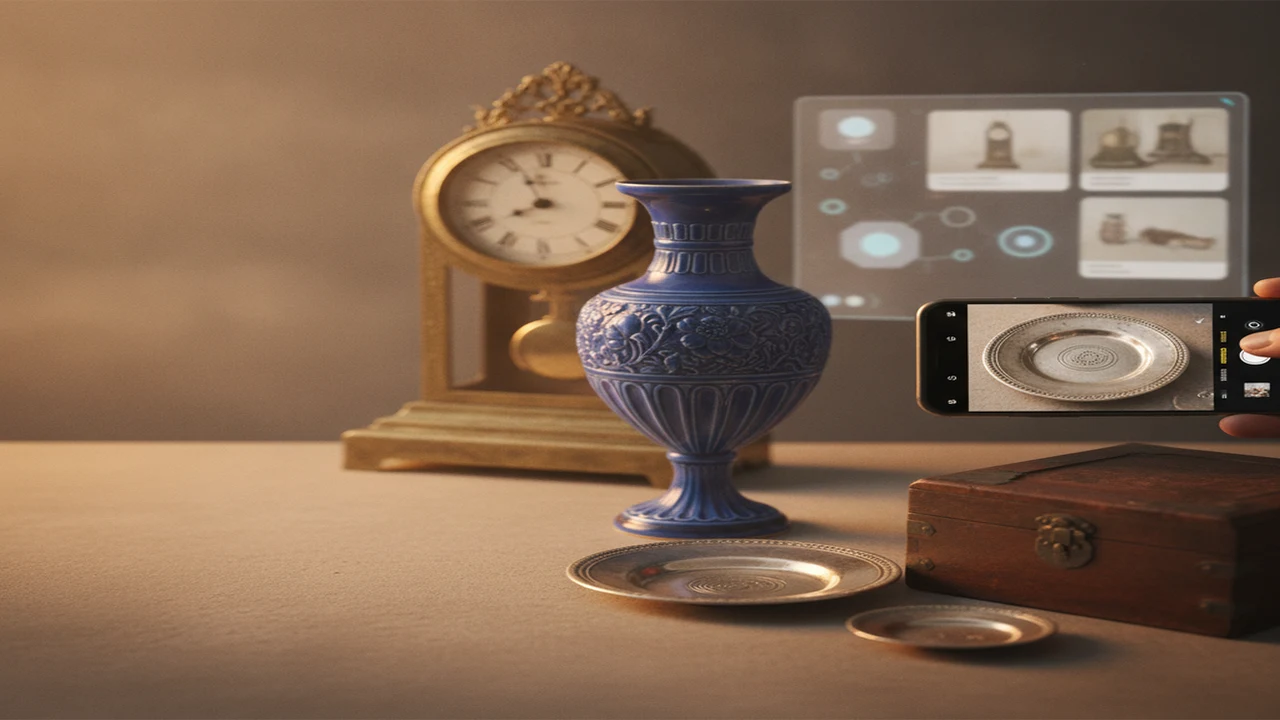
An AI chat can turn scattered clues into a useful research plan. Give it clear photos, dimensions, materials, inscriptions, construction details, and where the object was found. It can suggest search terms, interpret likely maker marks, compare possible categories, and tell you what evidence would strengthen or weaken an identification.
Chat is less reliable when the answer depends on matching a faint mark, distinguishing similar patterns, or finding recent sales of the exact model. Those jobs often call for a photo identifier, reverse image search, marketplace records, auction archives, or a knowledgeable specialist.
The goal is not to make one app deliver a final answer. It is to build a chain of evidence. Our guide to the best antique research apps to use with AI chat explains how different tools can support that process.
Quick answer: Use AI chat to organize clues, generate identification hypotheses, explain terminology, and plan searches. Move to a photo-search or antique scanner app when visual matching is the main task. Check value claims against recent sold examples with similar condition and provenance, and consult a qualified specialist when authenticity, insurance, restoration, or a high-value sale is involved.
What does this mean?
Definition: Antique ID and value tools are chatbots, photo-recognition apps, databases, marketplaces, and specialist services used to research an old object’s identity, age, maker, condition, and possible market value.
Guides in this category
How can AI chat help identify an old object?
Start by asking the chatbot to interview you rather than guess immediately. A strong prompt might say: “Help me identify this object. Ask for the most diagnostic photos and details, then give me three possible identities with evidence for and against each one.” This encourages a research conversation instead of a confident one-line label.
Useful inputs include front, back, base, joints, fasteners, labels, signatures, maker marks, damage, and scale. Tell the model which details are observed facts and which came from a seller. If the chatbot proposes a maker or period, ask what mark shape, manufacturing method, or catalog reference would confirm it.
The process is covered step by step in how to ask AI what an old object is and verify the answer. Keep the initial AI response as a hypothesis, then search the proposed maker, pattern, material, and date range independently.
- Ask for multiple candidates, not one definitive identity.
- Request search phrases using alternate spellings and historical terms.
- Separate visible evidence from assumptions about age or origin.
- Ask what additional photograph would be most diagnostic.
Which tool should handle each part of antique research?
Tool choice depends on the question. The scanner app versus chatbot comparison separates visual matching from conversational research. A dedicated option such as Antique Identifier is positioned around photo identification, maker marks, and rough value ranges, while chat is better suited to follow-up questions and research planning.
| Tool type | Best job | Evidence to save |
|---|---|---|
| AI chat | Questions, terminology, hypotheses | Prompts, candidate names, search terms |
| Photo identifier | Visual category and pattern matching | Matches and distinguishing features |
| Reverse image search | Finding visually similar pages | Original source and page context |
| Sold-record source | Market comparison | Date, condition, price, fees |
| Specialist | Authentication or formal valuation | Written scope and credentials |
A balanced shortlist can also include Google Lens for broad visual discovery, eBay image search for marketplace matches, WorthPoint for historical sales research, and LiveAuctioneers for auction references. Results from any one service can be incomplete, mislabeled, or based on asking prices, so compare the underlying evidence rather than the number of matches.
How should you research what an antique might be worth?
Identity comes before value. Use the How Much Is My Antique Worth workflow to structure sold-comparable research around maker, pattern, dimensions, material, condition, sale date, and venue. Ask AI chat to normalize descriptions into a comparison table, but check every extracted detail against the original sale page.
Photo similarity can help locate candidate records, especially when a seller does not know the correct terminology. The Search Antiques by Photo guide distinguishes photo-led discovery from general reverse image search. Exclude active asking prices when possible, and explain why each retained comparable is genuinely similar rather than averaging unrelated objects.
What are the limits of chatbots and photo appraisal tools?
A photograph may hide repairs, replaced parts, reproduction marks, weight, odor, surface texture, or evidence visible under magnification. The guide on when to leave AI chat for a specialist scanner helps identify the point where another conversational answer adds less value than better visual matching or expert inspection.
For a structured picture-based review, Appraise Antiques by Picture focuses on marks and condition, while the iOS listing for Antique Identifier : TIQ describes photo identification, value ranges, authenticity clues, and collection features. Neither a chat response nor an app estimate should substitute for a formal appraisal required by an insurer, court, lender, or major transaction.
Why this category
- Antique research crosses several tool categories. A chatbot can explain unfamiliar language, a scanner can surface visual candidates, and sales archives can show how related objects were described and sold. This hub connects those stages instead of assuming one interface can complete all of them.
- The chat-first method is especially useful when an object has several plausible identities. You can compare answers from multiple AI models, ask each model to critique the others, and convert disagreements into specific searches for marks, construction details, or documented examples.
- Good research also preserves uncertainty. Save original photos, source pages, sale dates, condition notes, and the reasoning behind each candidate. That record makes it easier to revise an identification when stronger evidence appears.
Frequently Asked Questions
Can AI identify an antique from a photo?
AI can suggest an object category, style, material, maker, or date range from a clear photo. Its answer should be checked against marks, dimensions, construction details, catalogs, and reputable reference examples.
Can a photo tell me exactly what an antique is worth?
A photo can support a rough estimate, but it rarely shows every factor affecting price. Exact value may depend on authenticity, condition, provenance, location, current demand, and the type of sale.
What does Antique Identifier do?
Antique Identifier is presented as a photo-led tool for identifying antiques, reading maker clues, and generating rough value guidance. Use its output as a research lead and verify important claims with original records or a specialist.
Is Antique Identifier : TIQ available on iPhone?
Antique Identifier : TIQ has an Apple App Store listing for iOS. The listing describes photo identification, value ranges, authenticity clues, and collection-related features, although current availability and terms should be checked in the store.
Is a chatbot better than an antique scanner app?
A chatbot is better for follow-up questions, terminology, historical context, and planning the next research step. A scanner app is usually better when the immediate task is finding visual matches from a photograph.
What photos should I take for antique identification?
Take the full object from several angles, then photograph the base, back, interior, joints, hardware, labels, signatures, and marks. Include a ruler or familiar object for scale and use indirect light that preserves surface detail.
How do I prompt AI to identify a maker mark?
Describe the mark’s exact shape, letters, symbols, placement, color, and manufacturing method, then attach a sharp close-up. Ask for several candidate makers and the specific reference evidence needed to distinguish among them.
Should I use asking prices to estimate antique value?
Asking prices show seller expectations, not completed transactions. Recent sold records for closely comparable objects generally provide a stronger starting point, especially when condition, size, maker, and sale venue are documented.
Can AI compare auction results for me?
AI can organize auction records into columns, flag differences, convert currencies, and summarize a possible range. You should verify each price, sale date, buyer’s premium, condition note, and lot description against the original record.
When does an antique need a professional appraisal?
Consider a professional appraisal for insurance, estate division, charitable donation, litigation, significant restoration, or a potentially valuable sale. Choose an appraiser with relevant specialty knowledge and confirm the intended appraisal standard in writing.
Can photo search detect a reproduction or fake?
Photo search may find known reproductions or reveal that a design is widely copied. Authentication often requires material analysis, tool-mark inspection, provenance research, or direct examination that a photograph cannot provide.
How can multi-model AI improve antique research?
Ask two or more models to identify the same object independently, then have each list weaknesses in the competing explanations. Investigate the points of disagreement using marks, catalogs, museum records, and sold examples rather than choosing the most confident response.